Back to Blogs

Can a Frenectomy Improve Infant Breastfeeding?

A frenectomy can significantly ease infant breastfeeding challenges caused by restrictive tongue or lip ties, improving latch and comfort for both baby and mother.

October 7, 2026
•
2 min read
Erin sits on a park bench, looking down at Owen, who is swaddled in a gray blanket and breastfeeding.
Back to Blogs

Can a Frenectomy Improve Infant Breastfeeding?

Erin sits on a park bench, looking down at Owen, who is swaddled in a gray blanket and breastfeeding.

A frenectomy can significantly ease infant breastfeeding challenges caused by restrictive tongue or lip ties, improving latch and comfort for both baby and mother.

October 7, 2026
•
2 min read

Frenectomy and Breastfeeding Connection

For many new mothers, the journey of breastfeeding can sometimes be unexpectedly challenging, leading to frustration and discomfort. Often, a tiny tissue called a frenum, located under the tongue or upper lip, can be the root cause of these difficulties. A simple procedure known as a frenectomy can significantly ease these issues, helping infants latch more effectively and reducing pain for mothers.

This intervention addresses mechanical limitations, potentially transforming a strenuous feeding experience into a successful one. Erin, a new mother in her early 30s, recently shared her struggles with Dr. Sarah Arafat at Tiny Dental Co. Despite her best efforts, her newborn son, Owen, consistently had trouble latching, resulting in painful feeding sessions and slow weight gain.

Erin felt disheartened and exhausted, wondering if she was doing something wrong. Her pediatrician suggested a potential tongue-tie or lip-tie, recommending a consultation with a pediatric dental specialist. Erin was eager to explore any option that could make breastfeeding a more positive experience for both her and Owen.


A woman with a concerned expression sits in a rocking chair, holding and looking down at a newborn baby who is latched to her breast in a sunny nursery.

What Is a Frenum?

A frenum is a small band of soft tissue that connects moving parts of the mouth, playing a crucial role in oral function. When a frenum is too short, thick, or tight, it can restrict movement, impacting an infant's ability to suck, swallow, and even speak later in life.

These conditions are commonly referred to as lip-tie (labial frenum) or tongue-tie (lingual frenum). Dr. Sarah Arafat often explains that the presence of these ties can vary greatly in severity.

Erin learned that a restrictive frenum could be the silent culprit behind Owen's latching issues. Dr. Sarah Arafat performed a thorough examination, gently assessing Owen's oral anatomy. She carefully evaluated the range of motion of his tongue and upper lip, which revealed the potential source of their feeding struggles.

Types of Oral Frena

  • Lingual Frenum: Connects the underside of the tongue to the floor of the mouth. A tight lingual frenum causes tongue-tie.
  • Labial Frenum: Connects the upper lip to the gum tissue above the front teeth. A tight labial frenum causes lip-tie.
  • Buccal Frena: Located in the cheek area, these are rarely restrictive in infants.
Dr. Sarah, wearing a mask, safety glasses, and blue gloves, gently examines an infant's mouth with her finger as a parent holds the baby in a modern dental office.

How Tongue-Tie Affects Breastfeeding

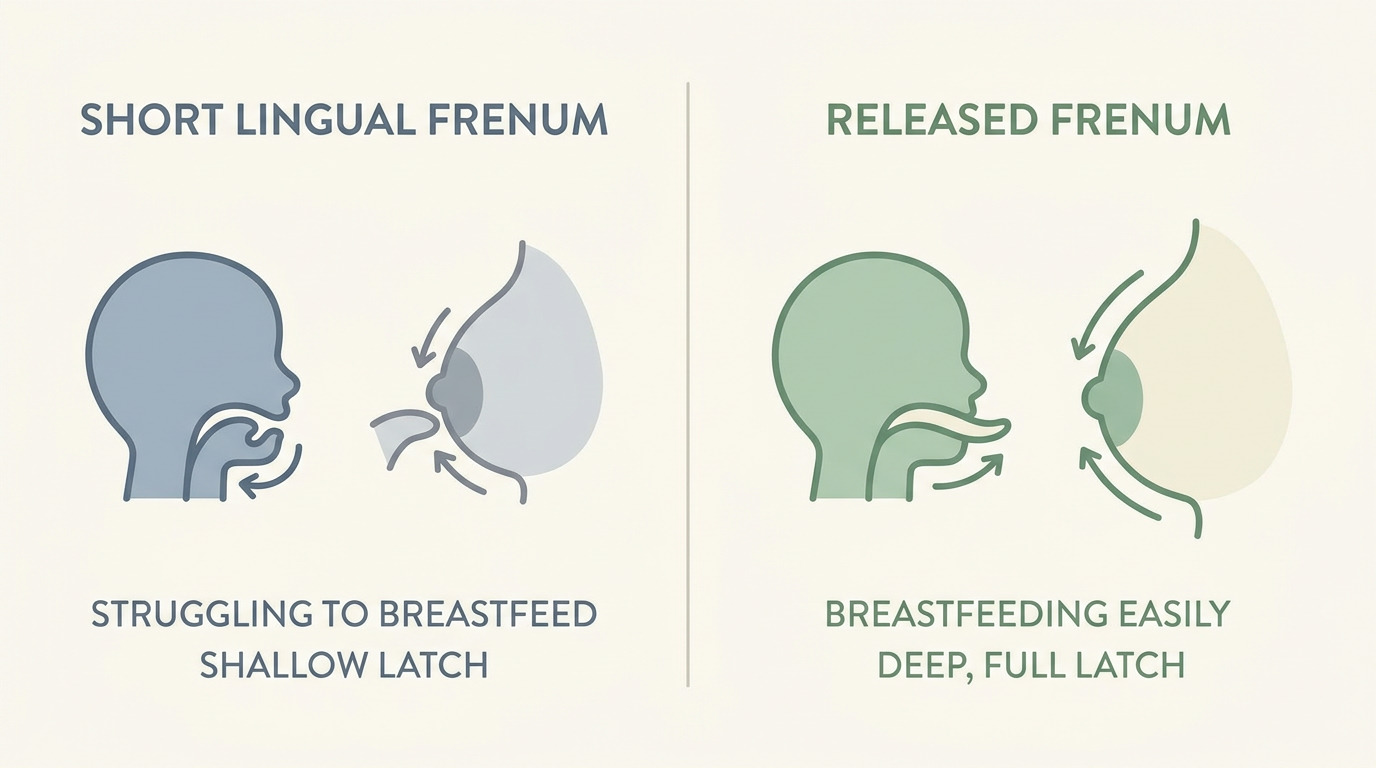
A tongue-tie significantly limits the tongue's mobility, making it difficult for an infant to create a proper suction and latch onto the breast. This restricted movement prevents the tongue from extending past the lower gum line, hindering its ability to cup the breast effectively. The infant struggles to extract milk efficiently, leading to prolonged feeding times and inadequate milk transfer, which can be incredibly frustrating for both mother and baby.

Erin described Owen's feeding sessions as often ending with him fussing, pulling away, and still appearing hungry. Dr. Sarah Arafat explained that Owen's weak suction was likely due to his tongue-tie, preventing him from effectively compressing the milk ducts. This also meant Erin was experiencing discomfort.

Signs of a Poor Latch

  • Shallow Latch: Infant only latches onto the nipple, not enough of the areola.
  • Clicking Sounds: Audible clicking during feeding, indicating loss of suction.
  • Nipple Pain/Damage: Mother experiences persistent pain, cracking, or bleeding nipples.
  • Poor Weight Gain: Infant is not gaining weight adequately despite frequent feedings.
  • Extended Feeding Times: Feeds lasting more than 40 minutes, often with infant falling asleep at the breast.
An illustration shows two infant profiles and breasts: left, a blue infant with short frenum and shallow latch; right, a green infant with released frenum and deep latch.

What Is a Frenectomy Procedure?

A frenectomy is a quick, minimally invasive procedure designed to release a restrictive frenum, restoring normal oral mobility. Dr. Sarah Arafat performs this delicate treatment with precision, often using a soft-tissue laser for accuracy and minimal discomfort. The laser offers benefits such as reduced bleeding, faster healing, and a lower risk of infection.

The entire procedure typically takes only a few minutes. Dr. Sarah Arafat discussed the frenectomy procedure with Erin and Owen’s father, Samuel, explaining each step carefully. She assured them that Owen would be comfortable throughout, with a topical anesthetic used to numb the area. The tiny wound heals quickly, often within a week.

The goal is to free the restricted tissue, allowing the tongue or lip to move naturally. This enables the infant to achieve a deeper, more effective latch, which can dramatically improve breastfeeding outcomes. Many parents notice an immediate improvement in their infant's latch post-procedure.

Dr. Sarah Arafat, wearing a mask and purple scrubs, points to a baby's mouth model on a white counter while Samuel holds baby Owen in a lavender-colored room.

Schedule a Pediatric Dental Consultation

If your infant is experiencing feeding difficulties, please contact Tiny Dental Co. to schedule a comprehensive evaluation. Dr. Sarah Arafat and her team are dedicated to supporting your family's oral health needs.

Post-Procedure Care for Infants

After a frenectomy, proper post-procedure care is essential to ensure optimal healing and prevent the frenum from reattaching. Dr. Sarah Arafat provides detailed instructions, emphasizing gentle stretches and exercises to encourage the newly released tissue to remain mobile. These exercises, often called "wound management," are brief but crucial.

They are designed to prevent the formation of scar tissue that could limit mobility again. Erin and Samuel carefully followed Dr. Sarah Arafat's guidance for Owen, performing the gentle stretches several times a day. They learned that consistency was key during the initial healing period, which usually lasts about two to three weeks. These simple steps help maintain the improved range of motion.

Key Aftercare Steps

  • Gentle Stretches: Perform specific exercises several times daily to maintain mobility.
  • Pain Management: Offer comfort with skin-to-skin contact or infant acetaminophen if needed.
  • Breastfeeding Support: Continue to work with a lactation consultant to optimize latch techniques.
  • Follow-Up Visit: Attend scheduled appointments with Dr. Sarah Arafat to monitor healing.
  • Observation: Watch for any signs of discomfort or difficulty, and contact the Tiny Dental Co. team if concerns arise.
Erin kneels on a rug, gently touching a baby's nose as he lies on a colorful play mat in a brightly lit room with bookshelves and toys.

Benefits for Mom and Baby

The benefits of a successful frenectomy extend to both the infant and the mother, transforming the breastfeeding experience from painful to positive. For the infant, improved tongue and lip mobility leads to a deeper, more effective latch, ensuring better milk transfer and healthier weight gain. This greater efficiency often translates to shorter, more satisfying feeding sessions.

The enhanced milk intake can also reduce gassiness and colic symptoms. Erin noticed a significant change in Owen almost immediately after his frenectomy. He was able to open his mouth wider and sustain a stronger suction, leading to less fussiness during feeds. For Erin, the immediate relief from nipple pain was profound, replacing dread with comfort during nursing.

For mothers, resolving issues like shallow latch and persistent nipple pain often renews their confidence and commitment to breastfeeding. It minimizes the risk of complications such as mastitis and engorgement, while fostering a stronger bonding experience. Dr. Sarah Arafat has witnessed countless families find relief and joy through this targeted intervention.

Erin smiles while holding and breastfeeding an infant wrapped in a blanket, sitting in a chair by a window with sheer curtains.

When to Consider a Frenectomy?

Considering a frenectomy is often appropriate when an infant consistently exhibits symptoms of feeding difficulties despite efforts to improve latch. These signs include persistent nipple pain for the mother, poor weight gain for the baby, and prolonged or frustrated feeding sessions. A consultation with an experienced pediatric dentist like Dr. Sarah Arafat can determine if a restrictive frenum is indeed the underlying cause. Early intervention can prevent ongoing challenges.

Erin initially hesitated, concerned about a procedure for her newborn, but Owen’s continuing struggles prompted her to seek expert advice. Dr. Sarah Arafat’s compassionate approach and clear explanations helped Erin feel confident in her decision. She emphasized that while some ties can be asymptomatic, others create significant distress.

Indicators for Evaluation

  • Maternal Pain: Persistent, severe nipple pain during breastfeeding.
  • Infant Feeding Issues: Difficulty latching, poor suction, clicking sounds during feeding.
  • Slow Weight Gain: Infant not gaining weight as expected for their age.
  • Engorgement/Mastitis: Mother experiencing recurrent breast inflammation or infection.
  • Unusual Oral Anatomy: Visible tight or short frenum upon examination.
Erin and Dr. Sarah Arafat sit in a modern waiting area, Dr. Arafat holding a clipboard and pen, looking at Erin who is listening intently.

Path to Healthier Feeding

The journey for many new families often involves unexpected hurdles, and breastfeeding can certainly be one of them. What starts as a natural, intuitive process can quickly become fraught with pain, frustration, and worry for a baby’s well-being. Understanding the intricate roles of oral anatomy, specifically the frena, and how they impact feeding can be a significant turning point for struggling parents.

A frenectomy, though a minor procedure, often offers profound relief and opens the door to a more harmonious breastfeeding experience. Dr. Sarah Arafat and her team at Tiny Dental Co. routinely help families navigate these challenges, providing not just treatment but also essential support and education. Their gentle approach ensures that both infant and parents feel cared for and informed every step of the way.

The clinic's commitment to airway-focused dentistry also means they consider the broader implications of oral structure on a child's overall development. For Erin, the transformation after Owen’s frenectomy was nothing short of life-changing. Owen quickly adapted, and their feeding sessions became peaceful and effective, marked by his satisfied sighs and healthy weight gain.

Erin no longer braced herself for pain, but instead cherished the quiet moments of connection with her son. The procedure allowed their breastfeeding journey to finally flourish, strengthening their bond and bringing immense relief to the entire family. It was a testament to how targeted dental care can significantly enhance a baby’s early life.

A glowing neon light forms a path on a dark floor, connecting a baby bottle with a glowing nipple, a central coiled light, and a neon outline of a person holding a baby.

Frequently Asked Questions

1. Is a frenectomy painful for a baby?
Dr. Sarah Arafat ensures babies are comfortable during a frenectomy by using a topical anesthetic. The procedure itself is very quick, and many infants are able to nurse immediately afterward. Any mild discomfort afterward is usually manageable with cuddles and gentle care.

2. How long does it take for a frenectomy to heal?
Healing after a frenectomy is typically rapid, with the small wound often closing within a week. Complete healing and resolution of any tenderness can take approximately two to three weeks. Following post-procedure exercises as directed by Dr. Sarah Arafat helps ensure optimal recovery and prevent reattachment.

3. What is the difference between a tongue-tie and a lip-tie?
A tongue-tie, or ankyloglossia, involves a short or tight band of tissue (lingual frenum) restricting tongue movement. A lip-tie involves a similar restriction of the upper lip due to a tight labial frenum. Both can impede proper latch and feeding, but affect different oral structures.

4. Can a frenectomy help with speech development later on?
While primarily addressed for feeding issues, a significant tongue-tie can sometimes affect speech development as a child grows. Releasing the lingual frenum through a frenectomy can improve tongue mobility, potentially preventing or alleviating future speech articulation problems.

5. Will my insurance cover a frenectomy?
Many dental and medical insurance plans may provide coverage for frenectomy procedures, especially when deemed medically necessary due to feeding difficulties. It is always recommended to contact your insurance provider directly to understand your specific benefits and coverage.

6. How soon after a frenectomy can my baby breastfeed?
Many infants can breastfeed immediately following a frenectomy, often while still in the dental office. Dr. Sarah Arafat encourages immediate nursing to help the baby practice the new, improved tongue and lip movements. This also provides comfort and helps initiate the healing process effectively.

Related Blog Posts

Stay Informed with Expert Insights & Tips About Dental Care

Airway Dentistry vs. Traditional Pediatric Dental Care

Airway dentistry expands traditional pediatric care by evaluating a child's breathing, sleep, and jaw development for overall health and early intervention.

9.9.2026
READ MORE

Airway Dentistry for Your Child's Sleep and Growth

Airway-focused dentistry improves children's sleep, growth, and overall health by addressing breathing patterns and oral development.

8.7.2026
READ MORE

Does My Baby Have a Tongue Tie?

This post explores tongue ties in infants, explaining what they are, how they affect feeding (for baby and mother), and the benefits of professional help like a frenectomy.

7.8.2026
READ MORE

Request An Appointment

Book an Appointment
Thank you! Your submission has been received!
Oops! Something went wrong while submitting the form.

Schedule your child’s dental appointment at Tiny Dental Company in The Woodlands, led by Dr. Sarah Arafat! We specialize in pediatric dental care in a friendly environment. Schedule today for expert care and a healthy smile that lasts a lifetime!

Young girl wearing large reflective sunglasses and smiling brightly against a teal blue background, exuding fun and confidence.
Cheerful young girl in a white beanie and t-shirt smiling and playfully adjusting her hat against a clean white background.