Back to Blogs

Airway Dentistry vs. Traditional Pediatric Dental Care

Airway dentistry expands traditional pediatric care by evaluating a child's breathing, sleep, and jaw development for overall health and early intervention.

September 9, 2026
2 min read
Tyler kneels barefoot on a wooden floor, wearing an olive shirt and jeans, looking down at Carter who sips from a small patterned cup at a kitchen counter. A stack of envelopes and a fruit bowl are on the granite counter.
Back to Blogs

Airway Dentistry vs. Traditional Pediatric Dental Care

Tyler kneels barefoot on a wooden floor, wearing an olive shirt and jeans, looking down at Carter who sips from a small patterned cup at a kitchen counter. A stack of envelopes and a fruit bowl are on the granite counter.

Airway dentistry expands traditional pediatric care by evaluating a child's breathing, sleep, and jaw development for overall health and early intervention.

September 9, 2026
2 min read

Understanding Airway Dentistry

Many parents are now asking about the differences between traditional pediatric dental care and an airway-focused approach. While both aim to promote excellent oral health, airway dentistry integrates an evaluation of breathing, sleep, and jaw development alongside standard dental concerns.

It represents a more comprehensive view of a child's overall well-being, recognizing the profound link between oral structures and systemic health. This broader perspective helps address underlying issues that might affect a child's growth and development beyond just their teeth. Dr. Sarah Arafat at Tiny Dental Co. often discusses these distinctions with families.

Tyler, a father of two young children, recently visited Dr. Sarah Arafat with questions about his son, Carter. Carter's dentist had mentioned crowded teeth, and Tyler wondered if there was more to consider than just braces in the future.
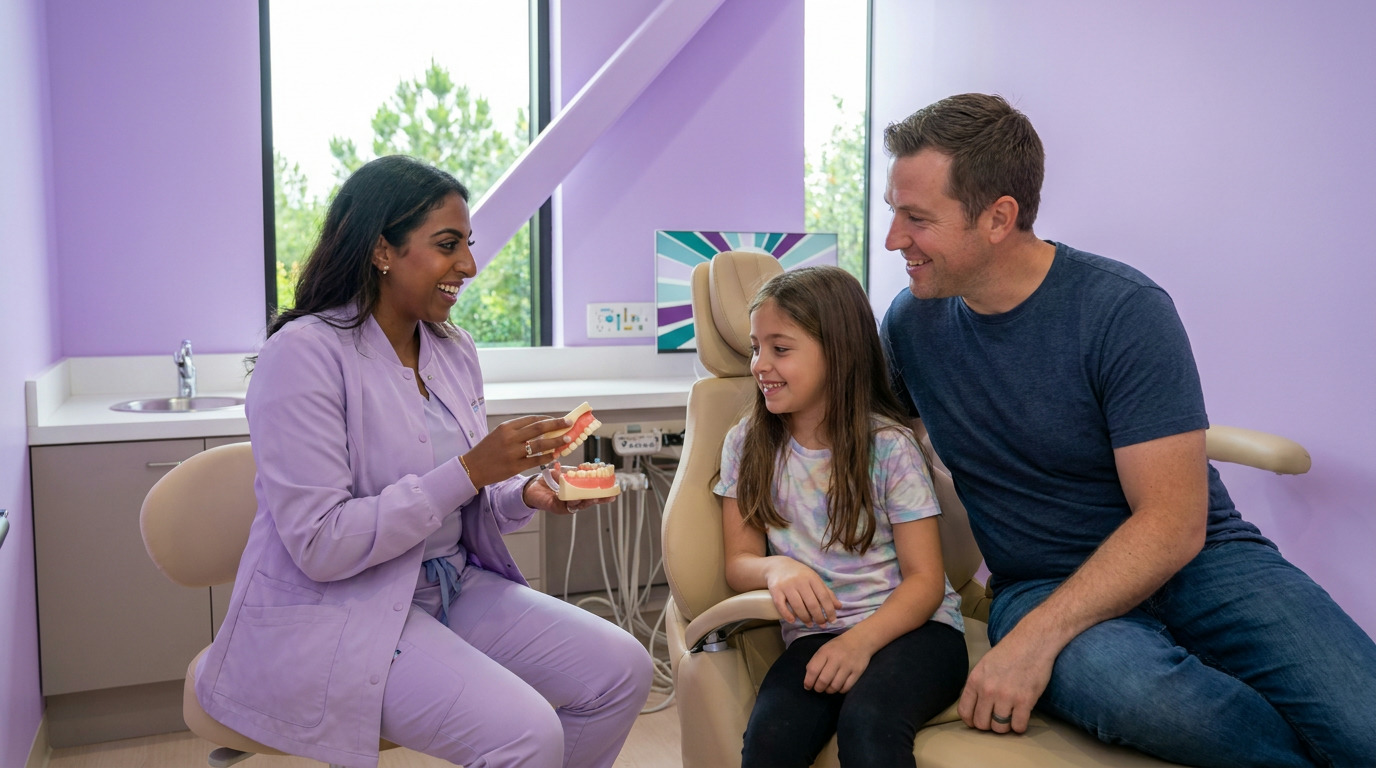
Dr. Arafat, in purple scrubs, sits holding a dental jaw model, smiling at a young girl and a man seated in a dental chair in a bright, modern dental office with lavender walls.

What Is Airway Dentistry?

Airway dentistry extends beyond typical dental cleanings and cavity fillings by focusing on the function of a child's breathing and the development of their facial structures. This approach seeks to identify potential issues like mouth breathing, snoring, or restless sleep that can impact a child's long-term health. Dr. Sarah Arafat explains that proper airway function is crucial for growth.

She often looks at how the jaws are growing, the position of the tongue, and the health of the tonsils and adenoids. These elements directly influence how a child breathes, especially while sleeping. Early detection can prevent more significant problems later on.

During Carter's initial assessment, Dr. Sarah Arafat gently observed his breathing patterns and facial development. She shared some key areas of focus:

  • Breathing Assessment: Observing if a child breathes primarily through their mouth or nose.
  • Tongue Position: Evaluating if the tongue rests properly in the roof of the mouth.
  • Jaw Development: Checking for adequate space for all permanent teeth.
  • Sleep Quality: Discussing signs of disturbed sleep like snoring or restlessness.
  • Oral Habits: Identifying habits like thumb sucking that can influence growth.
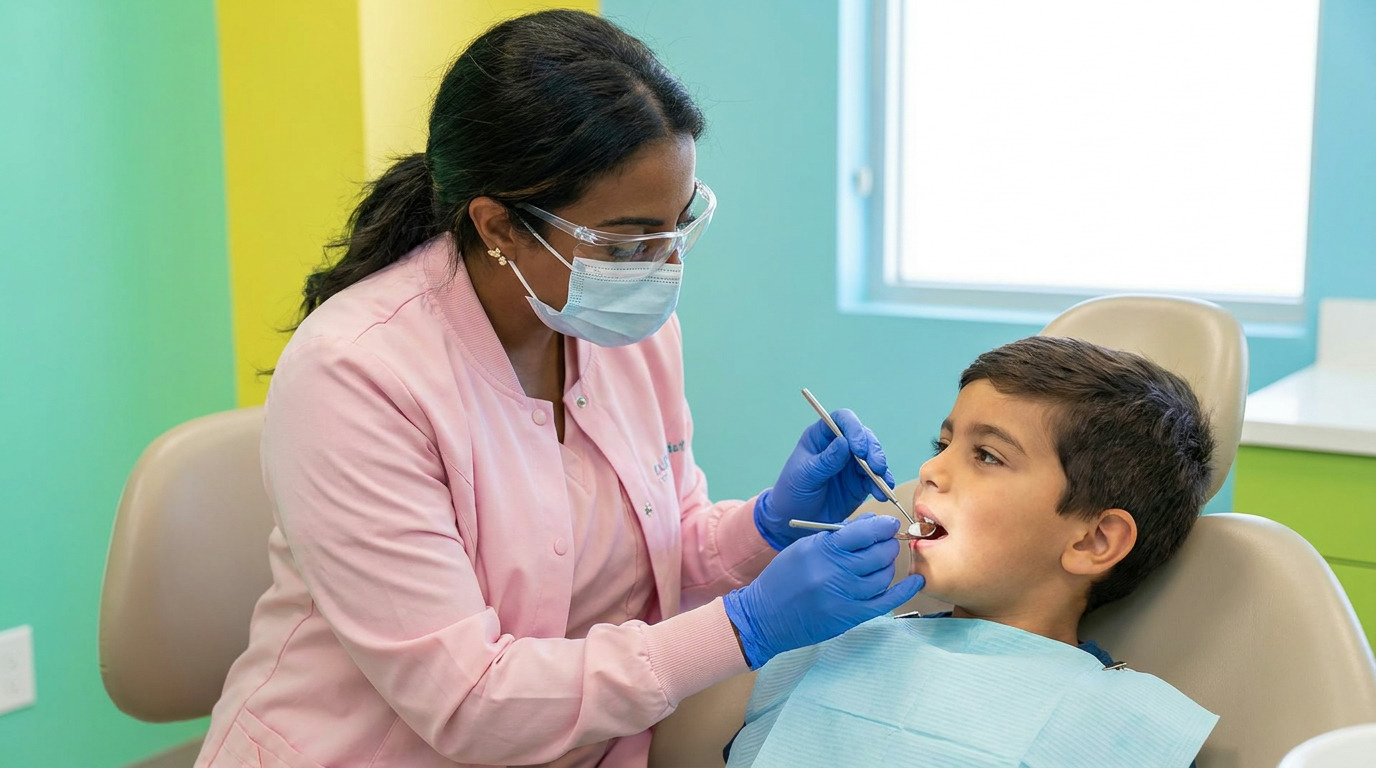
Dr. Sarah Arafat, wearing a pink jacket, mask, safety glasses, and blue gloves, examines a young boy's mouth with dental tools while he sits in a dental chair in a brightly colored room.

How Does Airway Dentistry Differ?

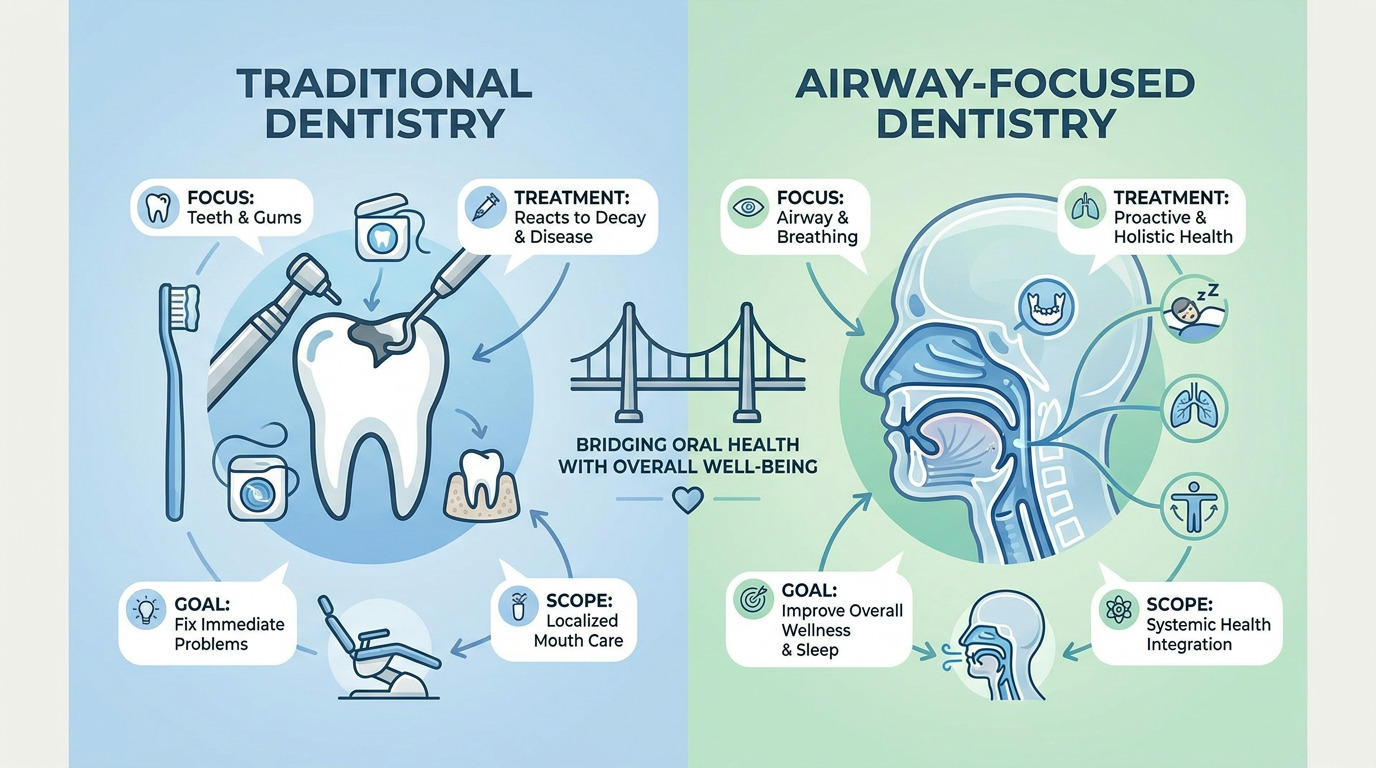
Traditional pediatric dentistry primarily concentrates on preventing and treating tooth decay, gum disease, and malocclusion (bad bites). Its focus is largely on the health of the teeth themselves and immediate oral issues. While incredibly important, this approach might not always delve into the underlying causes of certain dental problems.

Airway-focused dentistry, however, views the oral cavity as an integral part of the respiratory system and overall development. It doesn't replace traditional care but rather expands upon it, adding another layer of comprehensive evaluation. Dr. Sarah Arafat notes that this integrated perspective allows for earlier intervention.

For instance, when Tyler mentioned Carter's crowded teeth, Dr. Sarah Arafat considered not just genetics, but also factors like chronic mouth breathing. This could influence jaw development and consequently, tooth alignment. This led her to explain the detailed assessment an airway dentist performs:

  • Comprehensive Evaluation: Includes assessment of breathing, sleep, and facial growth.
  • Early Intervention: Focuses on addressing issues before they become severe.
  • Interdisciplinary Approach: Often collaborates with other specialists like ENTs or orthodontists.
  • Root Cause Analysis: Seeks to understand why dental problems are occurring.
  • Long-Term Health: Aims to improve overall health and development, not just oral health.
An infographic contrasts Traditional Dentistry, focusing on teeth and gums with tools like a toothbrush and drill, with Airway-Focused Dentistry, showing a human head profile highlighting airway anatomy and icons for sleep, lungs, and

Who Benefits From an Airway Assessment?

Any child can benefit from an airway assessment, particularly those exhibiting specific signs or symptoms. Children who consistently breathe through their mouths, snore, or struggle with restless sleep are prime candidates. Identifying these issues early can prevent a cascade of developmental and health problems.

Tyler began to recognize some of these signs in Carter, such as occasional snoring and a tendency to breathe with his mouth open while playing. Dr. Sarah Arafat reassured him that these observations were valuable clues. An airway assessment is a proactive measure for many families.

It helps ensure that a child's growth proceeds as ideally as possible. This approach can be especially impactful during crucial developmental years.

A teacher stands smiling behind a wooden table where six children are engaged in various activities, including drawing, reading, and building with colorful blocks, in a sunlit classroom.

Schedule an Airway Consultation

If you're noticing signs of potential airway issues in your child or simply want a comprehensive evaluation, Tiny Dental Co. offers expert airway-focused dentistry. Contact our office today to learn more and schedule a consultation with Dr. Sarah Arafat. Early assessment can make a significant difference in your child's health and development.

What Are Signs of Airway Issues?

Recognizing the signs of potential airway issues in children is the first step toward effective intervention. Parents are often the first to notice subtle changes in their child's breathing or sleep patterns. These observations are crucial for Dr. Sarah Arafat during an oral exam.

Persistent mouth breathing, even when awake, is a significant indicator. Tyler had noticed Carter often had his mouth slightly ajar, which he had previously dismissed as harmless. Dr. Sarah Arafat explained that while seemingly minor, these signs can have far-reaching implications.

Other common indicators that parents should be aware of include:

  • Chronic Mouth Breathing: Breathing primarily through the mouth, even when not congested.
  • Snoring or Noisy Breathing: Especially loud or disruptive breathing during sleep.
  • Restless Sleep: Frequent tossing and turning, waking up tired despite sufficient hours.
  • Dark Circles Under Eyes: Often referred to as "allergic shiners," can indicate disturbed sleep.
  • Daytime Fatigue or Irritability: Lack of quality sleep impacts mood and concentration.
  • Difficulty Concentrating: Poor sleep can mimic symptoms of ADHD.
  • Speech Issues or Lisp: Improper tongue position can affect speech development.
A young boy with messy hair lies in bed under a duvet, illuminated by moonlight from a window, with his mouth slightly open and eyes closed.

Early Intervention for Better Outcomes

Early intervention in airway issues can significantly improve a child's long-term health and development. Addressing problems like mouth breathing or improper tongue posture during the formative years can guide proper facial and jaw growth. This proactive approach aims to create optimal conditions for natural development.

Dr. Sarah Arafat explained to Tyler that waiting until all permanent teeth erupt to address crowded teeth might mean missing a critical window. If a child's jaw isn't developing correctly due to airway issues, it could lead to more complex problems. These include more severe malocclusion.

Such early efforts can sometimes reduce the need for more extensive orthodontic treatment later in life. It's about setting a child up for success from an early age.

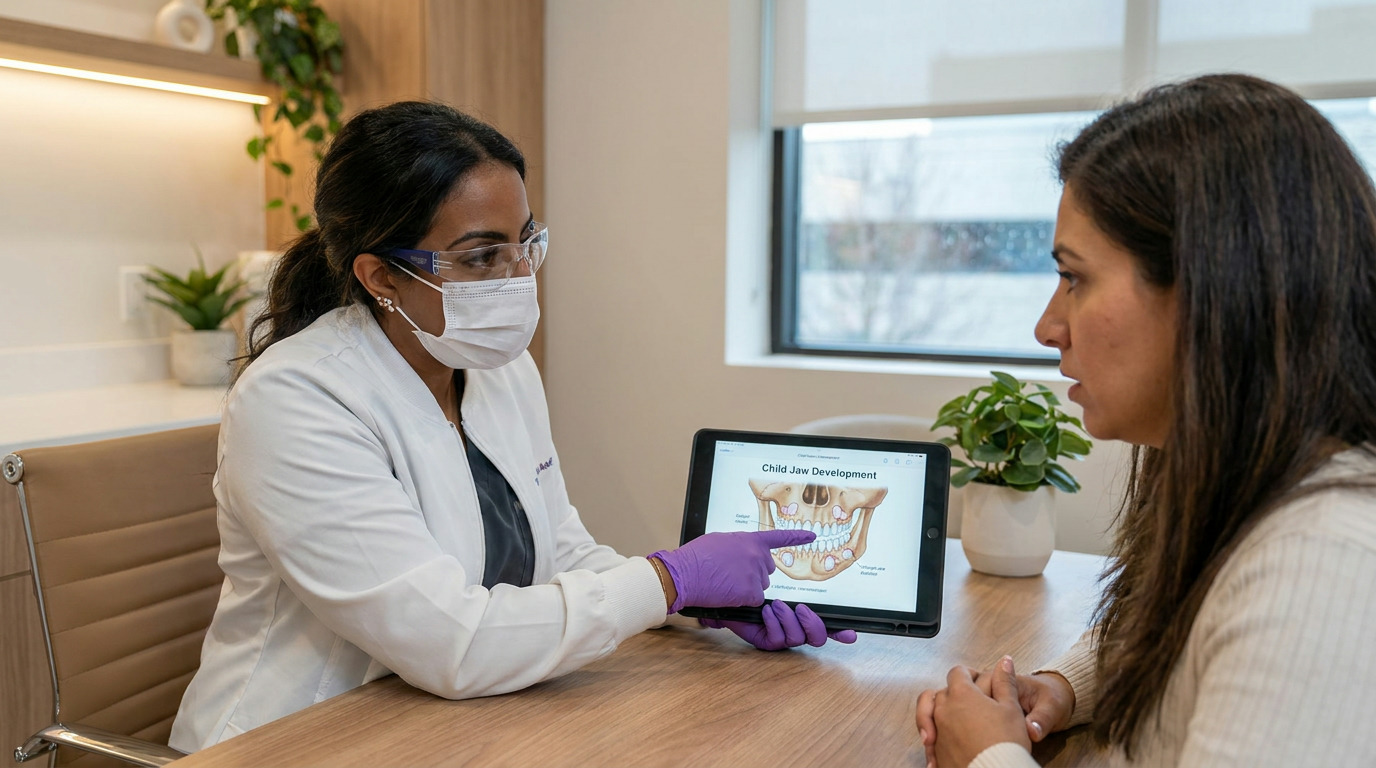
A dental professional in a white lab coat, safety glasses, mask, and purple gloves points to a "Child Jaw Development" diagram on a tablet for a patient with dark hair, seated across a wooden table in a modern office with a window.

What Happens During an Airway Assessment?

During an airway-focused dentistry assessment, Dr. Sarah Arafat conducts a thorough examination beyond what a traditional dental check-up might include. She observes the child's overall posture, facial balance, and discusses their general health history. Tyler was impressed by the detailed nature of Carter's evaluation.

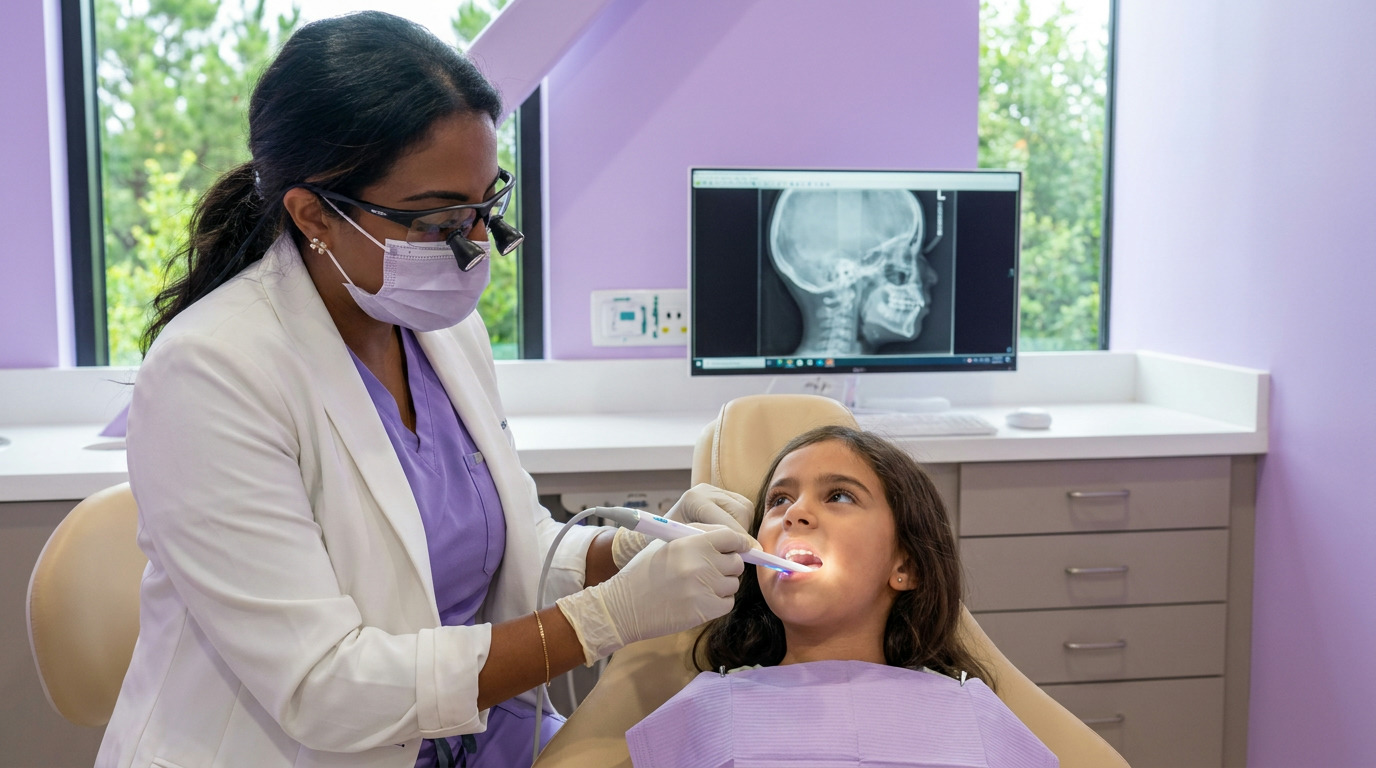
The assessment typically involves a gentle evaluation of the inside of the mouth, including the palate, tonsils, and tongue ties. It often includes taking photographs and potentially specific X-rays to understand bone development. The goal is to identify any physical obstructions or developmental patterns affecting breathing.

Dr. Sarah Arafat outlined the key components:

  • Comprehensive Health History: Reviewing sleep patterns, breathing habits, and growth.
  • Physical Examination: Observing facial structure, bite, tonsil size, and tongue position.
  • Imaging: Utilizing X-rays or other imaging to assess skeletal development and airway space.
  • Screening for Habits: Checking for thumb sucking or pacifier use that impacts growth.
  • Discussion of Symptoms: Eliciting concerns like snoring, restless sleep, or daytime fatigue.
Dr. Sarah Arafat, wearing a white lab coat, purple scrubs, mask, and loupes, uses an illuminated intraoral camera to examine a young girl's mouth in a dental chair, with a skull X-ray visible on a monitor in the background.

A Holistic Approach to Children's Health

Ultimately, airway dentistry offers a more holistic and integrated approach to a child's oral and overall health. It acknowledges that the mouth is not an isolated system but rather a vital part of the entire body.

By focusing on breathing and development early, this approach aims to foster optimal health outcomes far beyond just a healthy smile. Tyler left Dr. Sarah Arafat's office with a much clearer understanding of Carter's situation and a sense of proactive hope.

He realized that the subtle signs he had observed were indeed important and deserved attention. Thanks to the comprehensive assessment, they now had a path forward that considered Carter's full well-being, not just his teeth. This journey underscored for Tyler the profound impact that early intervention can have on a child's life. It wasn't just about preventing future dental problems; it was about ensuring Carter could breathe freely, sleep soundly, and grow into his fullest potential. The care at Tiny Dental Co. truly reflected a commitment to long-term health.

Tyler and Carter sit on a couch in a sunlit room, smiling as they look at an open children's book.

Frequently Asked Questions

1. What is airway-focused dentistry?
Airway-focused dentistry is a specialized approach that evaluates how a child's breathing, jaw development, and sleep quality impact their overall health. Dr. Sarah Arafat considers these factors alongside traditional dental care to ensure comprehensive well-being.

2. How does it differ from traditional pediatric dentistry?
Traditional pediatric dentistry primarily addresses tooth health and immediate oral issues. Airway dentistry expands on this by focusing on the underlying causes of problems, linking oral structures to breathing, growth, and sleep.

3. At what age should a child have an airway assessment?
An airway assessment can be beneficial at any age, especially if a child exhibits symptoms like mouth breathing or snoring. Early evaluation allows Dr. Sarah Arafat to intervene during critical developmental stages, ideally as young as possible.

4. Can airway issues affect a child's behavior?
Yes, airway issues can significantly impact a child's behavior and concentration. Poor sleep quality due to obstructed breathing can lead to daytime fatigue, irritability, and difficulty focusing in school, sometimes mimicking ADHD symptoms.

5. Are airway dental treatments painful for children?
Airway dentistry focuses on gentle, non-invasive or minimally invasive interventions designed for children. Dr. Sarah Arafat prioritizes comfort and clear communication throughout any recommended treatment, ensuring a positive experience.

6. Will insurance cover airway-focused dental treatments?
Coverage for airway-focused treatments can vary depending on your specific dental and medical insurance plans. The team at Tiny Dental Co. can help you understand your benefits and discuss financial options.

Related Blog Posts

Stay Informed with Expert Insights & Tips About Dental Care

Airway Dentistry for Your Child's Sleep and Growth

Airway-focused dentistry improves children's sleep, growth, and overall health by addressing breathing patterns and oral development.

8.7.2026
READ MORE

Does My Baby Have a Tongue Tie?

This post explores tongue ties in infants, explaining what they are, how they affect feeding (for baby and mother), and the benefits of professional help like a frenectomy.

7.8.2026
READ MORE

Lightscalpel CO2 Laser for Pediatric Dental Procedures

Discover how the LightScalpel CO2 laser provides precise, comfortable, and fast-recovering soft-tissue procedures for children.

7.8.2026
READ MORE

Request An Appointment

Book an Appointment
Thank you! Your submission has been received!
Oops! Something went wrong while submitting the form.

Schedule your child’s dental appointment at Tiny Dental Company in The Woodlands, led by Dr. Sarah Arafat! We specialize in pediatric dental care in a friendly environment. Schedule today for expert care and a healthy smile that lasts a lifetime!

Young girl wearing large reflective sunglasses and smiling brightly against a teal blue background, exuding fun and confidence.
Cheerful young girl in a white beanie and t-shirt smiling and playfully adjusting her hat against a clean white background.